A leaking tap often seems like a minor annoyance — an occasional drip that’s easy to tune out or postpone fixing. But what starts as a small nuisance can quietly escalate into a genuinely expensive problem if left unaddressed. Here’s why that persistent drip deserves more attention than it usually gets.
Why Leaking Taps Happen
Worn Washers or Seals
Over time, the rubber washers or seals inside a tap wear down, losing their ability to create a watertight closure — one of the most common causes of leaks.
Corroded Valve Seats
Mineral buildup or corrosion around the valve seat can create an uneven surface, preventing the tap from sealing properly even when fully closed.
Loose or Worn Components
Wear and tear on internal tap components, particularly in older fixtures, can cause small leaks that gradually worsen over time.
How a Small Leak Becomes a Bigger Problem
Wasted Water Adds Up
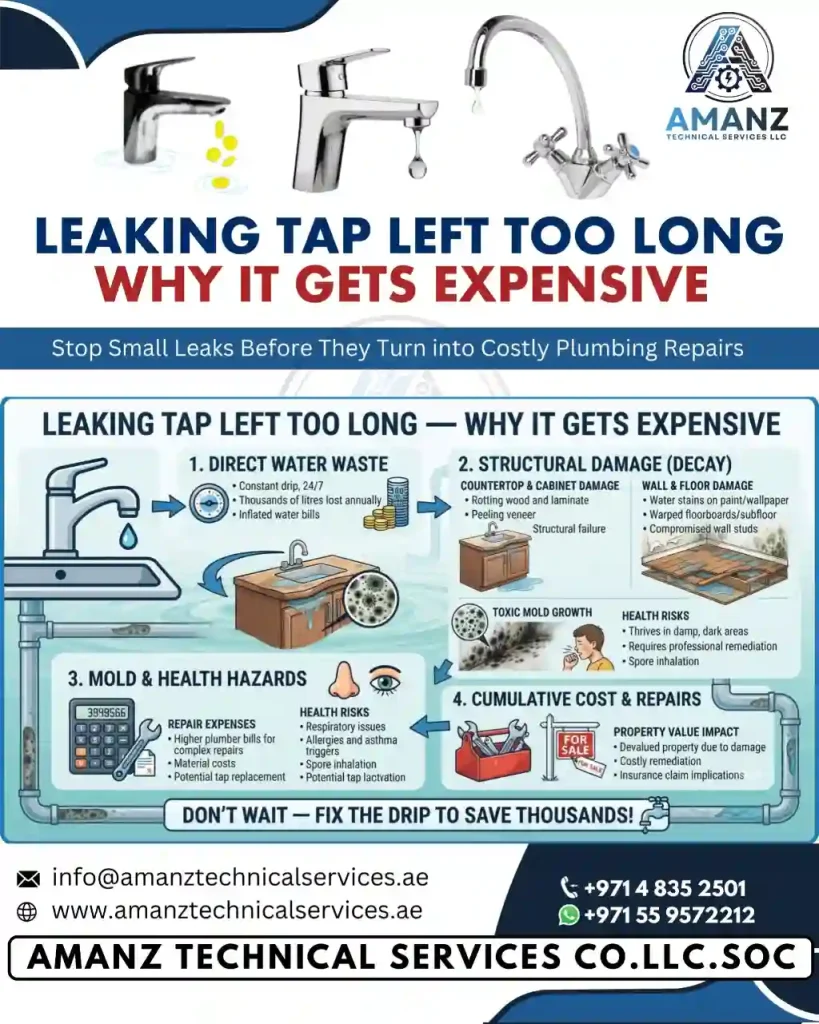
Even a slow, seemingly minor drip wastes a surprising amount of water over weeks and months, translating directly into a noticeably higher utility bill than most homeowners expect.
Increased Pressure on Internal Components
A leak often indicates that internal components are already under strain, and continued use without repair typically accelerates further wear — turning a simple washer replacement into a more involved fix.
Water Damage Risk
Leaks that spread beyond the tap to under-sink or in-wall connections can cause water damage to cabinetry, flooring, and structural components if left unaddressed.
Mold and Mildew Growth
Persistent moisture from an ongoing leak creates ideal conditions for mold and mildew, particularly in enclosed spaces like under-sink cabinets, leading to both health concerns and additional cleanup costs.
Potential for Sudden Failure
What starts as a slow drip can eventually develop into a major leak if worn components fail, often at the most inconvenient time rather than during a planned repair.
The Real Cost Comparison
Early Repair
Addressing a leaking tap early, often just replacing a washer or seal, is typically a quick, inexpensive fix requiring minimal labor and materials.
Delayed Repair
Waiting until the leak worsens can mean replacing more extensive internal components, addressing water damage to surrounding areas, or even dealing with mold remediation — all considerably more expensive than the original simple fix.
Signs Your Leaking Tap Needs Attention Now
- A drip that’s become more frequent or steady over time
- Visible water pooling beneath the sink or around the tap base.
- A musty smell developing in the cabinet beneath the sink
- Noticeably higher water bills without another clear explanation
Why People Delay Fixing Leaking Taps
Often, it’s simply a matter of the issue seeming minor enough to ignore, combined with the assumption that it can be dealt with “later” without real consequence. In reality, this delay is exactly what allows a small, cheap fix to develop into a significantly more expensive problem.
Taking Action Before It Escalates
Addressing a leaking tap as soon as it’s noticed — rather than waiting for it to become disruptive — is one of the simplest ways homeowners can avoid unnecessary expense. A quick call to a plumber in dubai for what’s often a straightforward repair saves both money and the hassle of dealing with a bigger issue down the line.
Conclusion
A leaking tap left too long rarely stays a small problem — wasted water, strain on internal components, and the risk of water damage or mold all compound the longer it’s ignored. Addressing the issue early with Amanz technical Services, while it’s still a simple fix, is a small investment that prevents a far more costly repair bill later.