When the power suddenly cuts out, or a specific outlet stops working, it’s not always obvious what’s actually wrong. Is it a single faulty socket, or is your circuit breaker doing its job by tripping in response to a bigger issue? Getting this distinction right matters — both for your safety and for avoiding unnecessary repair costs.
Understanding the Basics
What a Circuit Breaker Does
A circuit breaker is a safety mechanism designed to cut power automatically when it detects an overload, short circuit, or ground fault — protecting your home’s electrical system from damage or fire risk.
What a Faulty Socket Looks Like
By contrast, a faulty socket is usually a localized issue caused by wear, loose wiring, or physical damage rather than a fault in the wider electrical circuit.
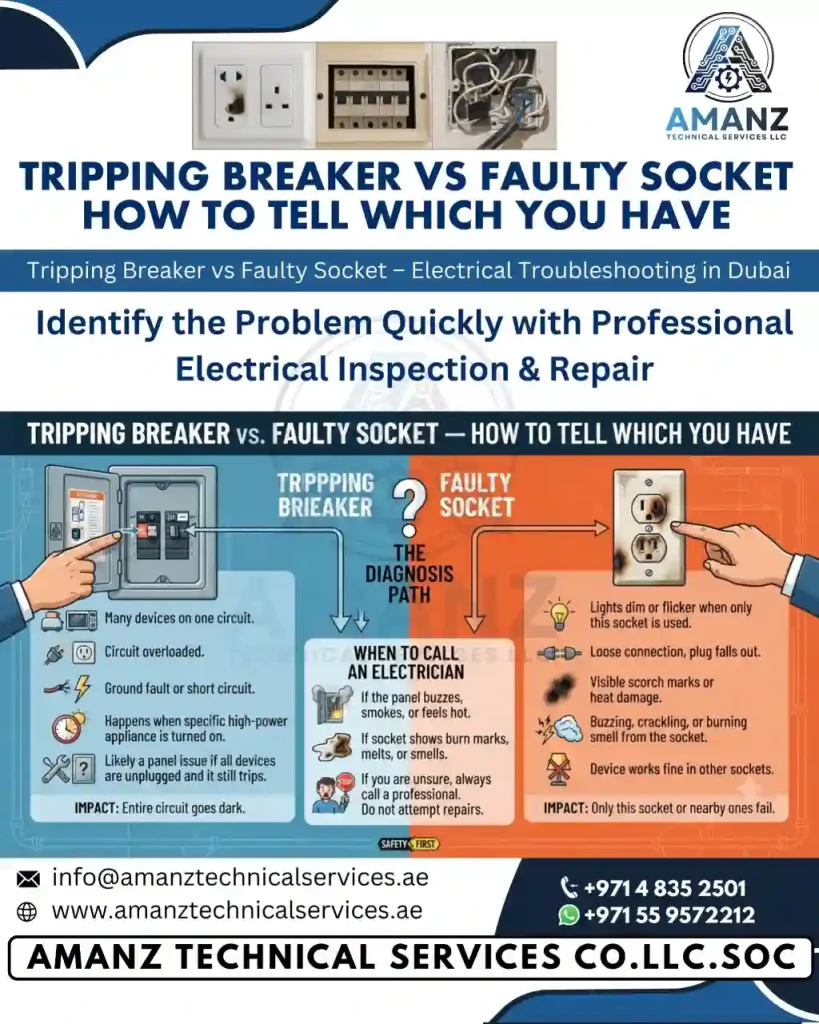
Signs You’re Dealing With a Tripping Breaker Issue
Multiple Outlets or Appliances Affected
If multiple sockets or an entire room lose power simultaneously, the issue is more likely a tripped circuit breaker than a single faulty outlet.
The Breaker Physically Trips
If inspection of the electrical panel reveals a breaker switch in the “off” or middle position, it generally confirms that the circuit breaker has tripped in response to an electrical fault or overload.
It Happens With Specific Appliance Use
If a breaker trips whenever you use a high-power appliance like an AC unit, oven, or washing machine, the circuit is likely overloaded.
Resetting Restores Power Temporarily
If flipping the breaker back on restores power, but it trips again under similar conditions, this confirms a recurring circuit-level issue rather than an isolated socket fault.
Signs You’re Dealing With a Faulty Socket
Only One Outlet Is Affected
If a single socket stops working while everything else on the same circuit continues functioning normally, this suggests a localized socket issue.
The Breaker Hasn’t Tripped
Check your electrical panel — if all breakers remain in the “on” position, the problem likely isn’t a circuit-level trip but something specific to that outlet.
Visible Damage or Wear
Cracked, discolored, loose, or warm-to-the-touch sockets are physical indicators of a localized fault rather than a broader circuit issue.
Intermittent Function
An intermittently working socket that is not affected by appliance use often points to a loose connection inside the outlet.
Why This Distinction Matters
Safety Implications
A tripping breaker is often your electrical system correctly protecting itself from an overload or fault — repeatedly resetting it without investigating the cause can be genuinely dangerous.
Cost Implications
Treating a circuit-wide issue as a simple socket repair means the underlying cause remains unaddressed, often leading to repeated trips and continued inconvenience.
What to Do in Either Situation
For a Tripping Breaker
Avoid repeatedly resetting it without understanding why it’s tripping. If it happens consistently with a specific appliance, consider whether that circuit is overloaded, and consult an electrician if the pattern continues.
For a Faulty Socket
Avoid using a socket showing visible damage or unusual heat. A straightforward socket replacement can often resolve isolated issues once diagnosed by a qualified electrician.
When to Call a Professional
Any electrical services involving repeated breaker trips, visible damage, burning smells, or uncertainty about the cause warrants a professional electrician’s assessment rather than ongoing guesswork or DIY troubleshooting.
Conclusion
Distinguishing between a tripping breaker and a faulty socket comes down to observing the pattern — whether the issue is isolated to one outlet or affecting a broader circuit, and whether the breaker itself has physically tripped. When in doubt, a professional assessment ensures the real cause is addressed safely, rather than risking recurring issues or genuine safety hazards.